Concrete Cutting - Payless Concrete Sawing
Also called concrete sawing — is the precise removal of concrete using saws fitted with diamond blades or wires. Payless Concrete Sawing specializes in flat sawing, wall sawing, wire sawing, and hand sawing techniques to meet project specifications for slabs, walls, curbs, pavements, and structural elements. We serve general contractors, engineers, municipalities, property owners, and specialty trades across Castroville and the Central Coast.
Why concrete cutting matters
Concrete cutting provides controlled, predictable removal or opening creation without the excessive vibration and collateral damage associated with jackhammers or brute-force demolition. When executed correctly, concrete cutting yields smooth edges and accurate dimensions required for jointing, trenching, door and window openings, slab removal, and saw-cut joints. Proper cutting protects embedded utilities and structural members while minimizing repair and finishing costs for follow-up trades.
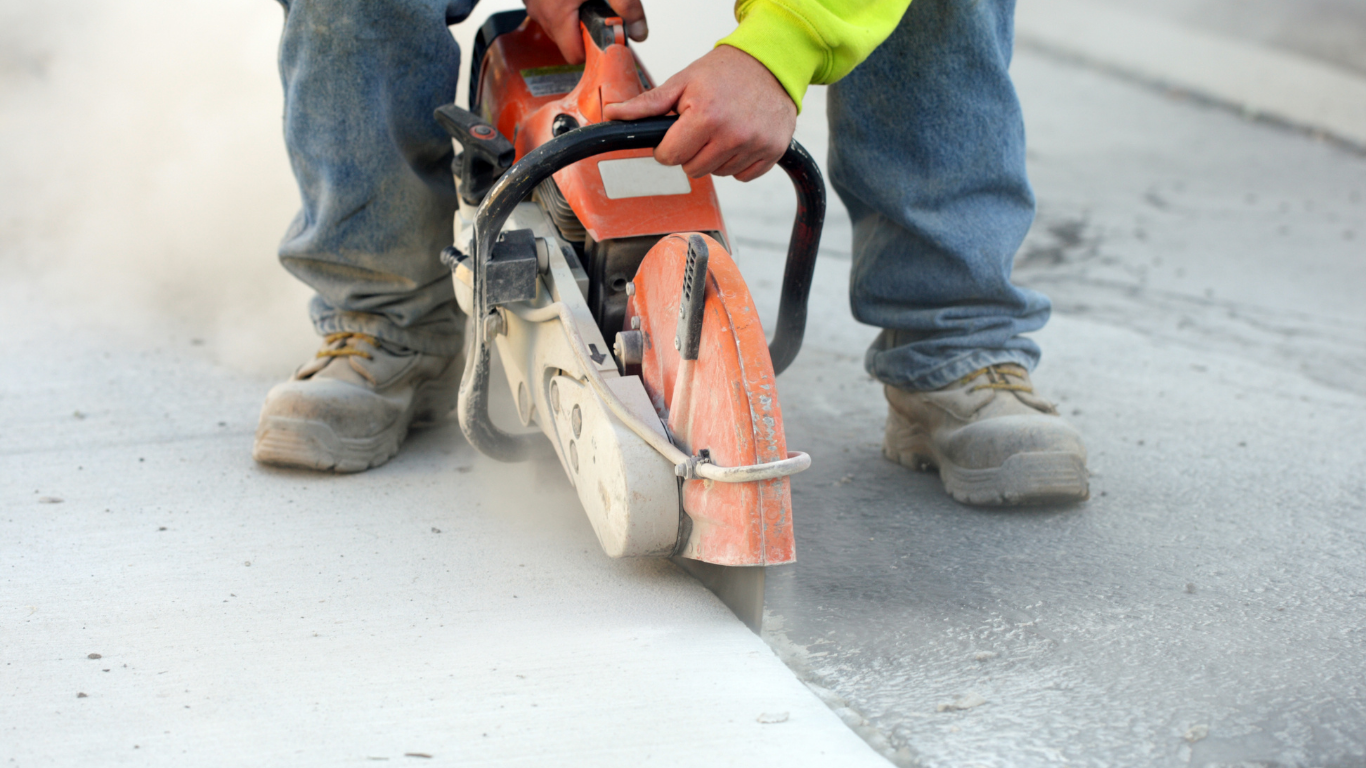
Types of concrete cutting we provide
Flat Sawing
Used for horizontal surfaces like slabs, parking lots, and pavements. Ideal for trenching, creating control joints, and partial slab removal.
Wall Sawing
Vertical sawing for walls, columns, and facades to create openings such as doors, windows, and service penetrations.
Wire Sawing
Electrical diamond wire is used for cutting large or heavily reinforced structures where deep cuts are required, or where minimal vibration is essential.
Hand and small saws
For detailed valley cuts, tight areas, or finish work next to delicate surfaces.
Key benefits of professional concrete cutting
Accuracy and clean edges that reduce finishing and patch work.
Reduced disturbance to adjacent structures and finishes.
Faster execution for on-schedule completion of trade coordination.
Safer operations with lower dust generation and controlled vibration.
Cost savings through precise removal and minimal rework.
Applications and use cases
Utility trenches in slabs and pavements for plumbing, electrical, or drainage installations.
Creating openings for doors, loading bays, and windows in concrete walls.
Saw-cutting for precise removal of deteriorated slab sections or to install structural modifications.
Cutting openings for mechanical equipment pads and tie-ins.
Saw-cut joints to control cracking and improve slab longevity.
How Payless Concrete Sawing approaches a concrete cutting project
Initial consultation and plan review
We evaluate drawings, reinforcement details, and utility locations. Photos and site plans accelerate our ability to provide a detailed estimate.
On-site assessment
A field visit confirms access, working clearances, and potential obstructions.
Method selection
We choose flat saw, wall saw, wire saw, or hand saw based on material thickness, reinforcement, and tolerance requirements.
Permitting and coordination
We coordinate with project managers and municipal bodies for traffic control and permit requirements when work impacts public rights-of-way or buildings.
Preparation and safety setup
Barrier placement, signage, and containment are established. For indoor work, we isolate work areas and implement dust suppression.
Execution
Our trained operators perform cuts to specified lines with appropriate cuts depth and tolerance.
Cleanup and verification
We manage slurry, collect debris, and verify cut accuracy with measurements and photos if requested.
Technical considerations and best practices
Blade selection: Diamond blades are selected for aggregate type and reinforcement to extend blade life and produce a clean cut.
Water suppression vs. dry cutting: Wet cutting is preferred to reduce dust and improve blade life. Dry cutting is used only where water is impractical; we then employ HEPA vacuums and dust containment.
Reinforcement handling: Reinforcing steel is cut with diamond blades or wire saws with planned approaches to avoid tool damage and ensure clean edges.
Tolerance and layout: We work from supplied layout controls or establish reference lines on-site to meet engineered tolerances.
Common project scenarios
Retrofits: Making openings for mechanical and electrical upgrades in occupied facilities without damaging finishes.
Road and sidewalk work: Cutting precise pavement sections for replacement or trenching with minimal traffic disruption.
Structural modifications: Removing sections of concrete beams or slabs for beam replacement or retrofit while protecting adjacent load paths.
Architectural alterations: Creating new openings with clean edges that reduce finishing and cladding remediation.
Safety and environmental controls
We follow dust suppression and slurry management procedures to meet local environmental rules. Crews use appropriate PPE and implement jobsite controls to protect workers and bystanders. For indoor projects we emphasize negative air and containment to protect building occupants.
Cost drivers
Concrete cutting costs vary by thickness, depth, reinforcement, access, site conditions, disposal, and permitting. Wire saw work and deep wall saws generally require higher equipment and mobilization costs. We provide itemized quotes that separate cut per linear foot or per penetration so clients understand cost drivers and options.
Frequently asked questions (FAQs)
Q: How deep can you saw?
A: Depth depends on the equipment used. Flat saws commonly cut slabs up to several inches to a few feet depending on model; wall saws and wire saws handle much deeper cuts into thick structural elements. Provide project dimensions to get a precise capacity assessment.
Q: Will cutting create a lot of dust and noise?
A: Diamond sawing generates noise and dust, but we reduce airborne dust using water suppression, HEPA vacuums, and containment. Noise conforms to practical limits and can be further managed with night work if permitted.
Q: Can you cut around existing utilities?
A: Yes—we verify utilities on-site and coordinate with owners and contractors. Utility locations from drawings are helpful; when unknown, we recommend scanning services to locate embedded services before cutting.
Q: How long does a typical slab cut take?
A: Timing depends on length, depth, and reinforcement. A small control joint or slab cut may take an hour or two; larger trenching or wall saw work may take multiple days, including mobilization and set-up.

Contact
For precise concrete cutting solutions in Castroville and the Monterey County area, call Payless Concrete Sawing at (831) 498-6355. Provide drawings or photos and we’ll propose an efficient cutting methodology and itemized estimate.
Contact Us
We will get back to you as soon as possible.
Please try again later.