Concrete Demolition - Payless Concrete Sawing
Concrete demolition requires experienced crews, controlled methods, and coordination with structural, environmental, and permitting requirements. Payless Concrete Sawing provides selective and controlled concrete demolition services in Castroville, Monterey County, and the Central Coast that prioritize safety, precision, and disposal compliance.
Why controlled concrete demolition matters
Demolition is not just removal — it is a process of safely separating and disposing of concrete while protecting surrounding structures and utilities. Poorly planned demolition can create excessive vibration, damage to adjacent finishes and structures, and environmental issues with debris and slurry. Controlled demolition by qualified professionals reduces collateral impact, preserves necessary structural elements, and positions the site for efficient progress by follow-on trades.
Types of demolition services we offer
Selective demolition
Targeted removal of slabs, walls, footings, and structural components while preserving nearby elements.
Slab removal
Removing deteriorated or unwanted slabs for replacement or regrading.
Concrete breaking and removal
Using appropriate techniques and tools to break and remove concrete sections safely.
Structural deconstruction (in coordination with engineers)
Controlled dismantling of specific structural elements under engineered direction.
Debris management and disposal
Segregation, loading, and lawful disposal or recycling of concrete material.
Key benefits of professional demolition
Reduced risk to adjacent structures and services
Controlled noise, vibration, and dust
Efficient material handling and disposal
Coordination of traffic control and site logistics
Compliance with environmental and municipal requirements
Tools and methods used
Diamond saw cutting to create controlled faces and reduce the need for banging or heavy impact tools.
Wire sawing to remove large reinforced sections where vibration would be problematic.
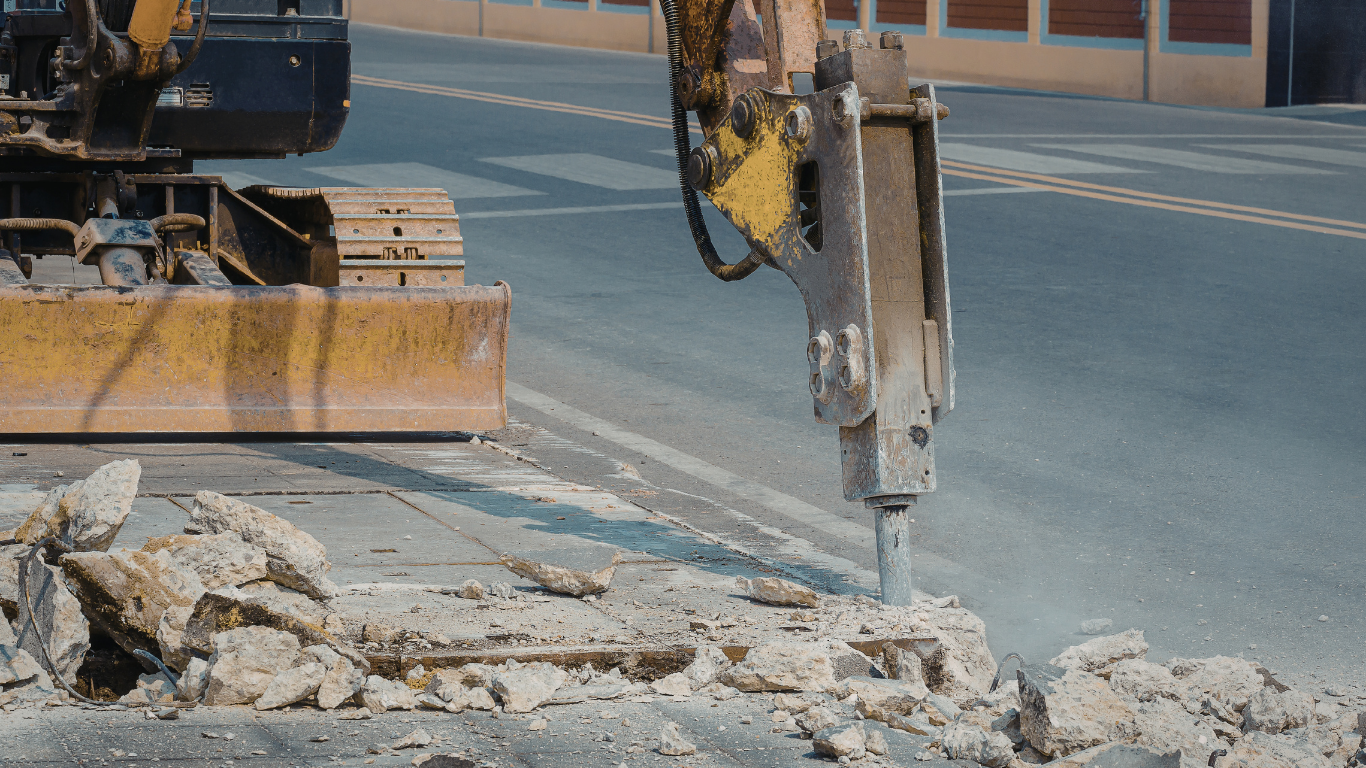
Hydraulic breakers and excavators for bulk removal where access and vibration allowances permit.
Mobile crushing and recycling coordination for large volumes of concrete to reduce disposal costs where practical.
How we plan and execute demolition projects
Project evaluation
Review structural drawings and existing site conditions to determine removal strategy and safety measures.
Structural coordination
For elements that support loads or integrate with other systems, we work with engineers to sequence work and protect load paths.
Access and logistics
Evaluate access for machinery, debris removal, and staging of materials.
Safety and environmental controls
Implement dust suppression, slurry containment, and perimeter protection. Confirm dewatering or erosion control where required.
Method selection
Choose the best demolition tools—saws for cutting, controlled hydraulic breakers for heavy sections, wire saws for large blocks, or excavators for bulk removal.
Execution
Carefully execute demolition with ongoing monitoring to prevent unintended damage.
Site restoration and cleanup
Grade and prepare the area for follow-on work, remove debris, and provide documentation of disposal.
Contact
For controlled, precise concrete demolition in Castroville and the Central Coast, contact Payless Concrete Sawing at (831) 498-6355. Provide project drawings or photos for a prompt assessment and tailored demolition plan.
Contact Us
We will get back to you as soon as possible.
Please try again later.
Common demolition scenarios
Slab replacement: Remove damaged concrete and prepare for new slab installation with clean edges and consistent subgrade.
Structural removal: Partial removal of beams or walls as part of a retrofit under engineer direction.
Tenant improvements: Removing sections of slab, ramps, or walls to reconfigure space with minimal disruption to occupied areas.
Pavement reconstruction: Removing failed pavement sections for replacement with improved drainage and subbase work.
Safety and environmental responsibilities
We prioritize worker and public safety through PPE, fall protection where required, and jobsite barricading. Dust suppression and slurry management are key environmental controls, and we follow local disposal guidelines to handle debris responsibly. For large demolition projects, we also discuss recycling and reuse options to reduce landfill loads where feasible.
Cost considerations
Demolition pricing varies with access, structural complexity, the need for shoring, disposal requirements, and the volume of material removed. Selective demolition often requires more labor and care but can save money by preserving valuable adjacent systems and finishes.
Frequently asked questions (FAQs)
Q: Do you provide demolition for structural elements?
A: We perform selective structural demolition under engineering guidance. For load-bearing components, we coordinate with structural engineers and general contractors to ensure safe sequencing and temporary supports as required.
Q: How do you minimize vibration and noise?
A: We use saw cutting and wire saws where possible to reduce vibration. For heavy removal, we schedule work and use techniques designed to limit impact to nearby structures. Night or off-hour work is available if permitted.
Q: What happens to demolition debris?
A: Concrete is typically hauled to approved disposal or recycling facilities. We segregate material and can arrange for recycling where facilities and project economics allow.
Q: Can you handle interior demolition in occupied buildings?
A: Yes. We implement containment, HEPA filtration, and scheduling to minimize occupant disruption. We coordinate closely with facility managers to meet occupancy and safety requirements.
Q: Will demolition affect nearby utilities?
A: We verify and mark utilities before work. When utilities are adjacent to the work area, we coordinate with utility owners and contractors to protect services and arrange for temporary support or shutoffs as needed.